
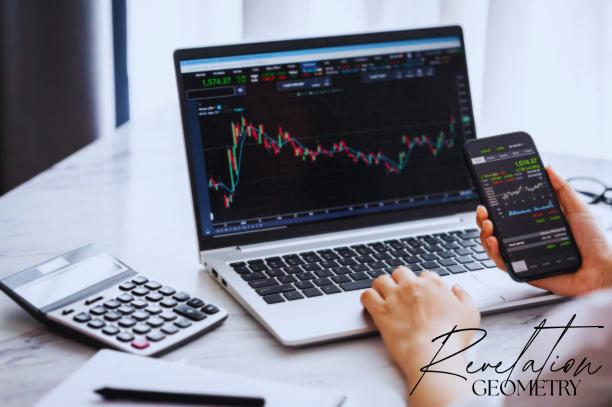
If you’ve ever sent money abroad, received a dollar transfer, or just watched the Naira slide against the Dollar and thought “someone is making money from this” you were right. That someone could be a forex trader.
But what exactly is forex trading? And is it something you can actually do?
Let’s get into it.
Forex is Just Currency Exchange Taken Seriously
Forex stands for Foreign Exchange. At its most basic level, it’s the buying and selling of currencies.
You’ve already done this before. Anytime you exchanged Naira for Dollars at a Bureau De Change , or received a payment in a foreign currency, you participated in the foreign exchange market in a small way.
Forex trading is that same idea but instead of exchanging money to travel or pay bills, traders exchange currencies specifically to profit from the way exchange rates move.
That’s it. That’s the whole game.
How the Actual Trading Works
Currencies in forex are always quoted in pairs, one currency measured against another.
Some examples:
- USD/NGN — US Dollar vs Nigerian Naira
- EUR/USD — Euro vs US Dollar
- GBP/USD — British Pound vs US Dollar
The first currency in the pair is what you’re buying or selling. The second is what you’re using to measure it.
Here’s a real-world example to make it click:
Say USD/NGN is trading at 1,550. That means 1 US Dollar is currently worth 1,550 Naira. You study the market and believe the Dollar is about to strengthen, maybe because of something happening in the US economy. So you buy Dollars.
A week later, the rate moves to 1,620. You sell. That 70-Naira difference per Dollar? That’s your profit.
Of course, it can also go the other way and that’s where the risk lives.
Who Actually Moves the Forex Market?
This market doesn’t run on vibes. There are real players behind every price movement:
Central Banks are the most powerful. When the CBN intervenes in the FX market or the US Fed raises interest rates, exchange rates react sometimes violently. These decisions move billions.
Commercial Banks like GTBank, Zenith, JPMorgan, and Deutsche Bank handle the bulk of daily forex transactions for themselves and their corporate clients.
Multinational Corporations need forex constantly. A Nigerian company importing machinery from Germany has to convert Naira to Euros. An oil company selling in Dollars but operating in Nigeria does the reverse. All of this creates constant demand and supply for currencies.
Retail Traders like you, makes up a smaller slice of the market, but it’s a growing one. Online brokers have made it possible for anyone with a phone and a few thousand Naira to access the same market that banks trade in.
The Good Thing about the Forex Market
Here’s a number that puts everything in perspective: the forex market trades over $7 trillion every single day.
Not per year. Per day.
That makes it the largest financial market on earth bigger than all the world’s stock markets combined. And that scale matters for traders because:
- The market is extremely liquid, there’s almost always someone to buy from or sell to
- No single trader, no matter how rich, can manipulate the whole market
- You can enter and exit trades quickly without waiting days for a buyer
The Market Never Sleeps
One of the biggest advantages forex has over stock trading is the hours.
Stock markets open and close at fixed times. The Nigerian Exchange Group (NGX) runs from 10AM to 2:30PM on weekdays. Miss it, and you wait till tomorrow.
Forex doesn’t work like that. Because currencies are traded across the globe, from Sydney to Tokyo to London to New York. The market runs almost 24 hours a day, Monday through Friday.
Here’s how the sessions line up in West Africa Time (WAT):
| Session | WAT Hours | Most Active Currencies |
|---|---|---|
| Sydney | 12:00 AM – 9:00 AM | AUD, NZD |
| Tokyo | 2:00 AM – 11:00 AM | JPY, AUD |
| London | 9:00 AM – 6:00 PM | EUR, GBP |
| New York | 2:00 PM – 11:00 PM | USD, CAD |
The sweet spot for most traders is the London–New York overlap (2:00 PM – 6:00 PM WAT). That’s when two of the world’s biggest financial centres are both active, volume is highest, and price moves are sharpest.
If you’re trading part-time around a job or school, this window is worth knowing.
Why People Are Drawn to Forex
Beyond the basics, forex has a few features that make it genuinely attractive especially compared to other ways of investing:
Low barrier to entry. You don’t need millions to start. Many brokers let you open an account with as little as $10 or $20. That’s not a recommendation to start with that little, but it shows how accessible the market is.
You can profit going up or down. In the stock market, you mostly make money when prices rise. In forex, you can trade in both directions. If you think the Naira will weaken against the Dollar, you can position for that and profit when it happens.
It fits around your life. Because the market runs all day, you’re not locked into specific hours. Morning person? Trade the Tokyo session. Night owl? The New York session is yours.
The Truth Hidden To Beginners
Most people who come to forex come because they heard someone made money from it. That’s fine. But there’s a number that doesn’t get mentioned as often:
A large majority of retail forex traders lose money especially early on.
That’s not said to scare you off. It’s said because understanding why people lose is actually the most useful thing you can learn before you start. Most losses come down to three things: trading without a strategy, ignoring risk management, and starting with real money before understanding the basics.
None of those are problems you can’t solve. But they do require education first which is exactly why you’re reading this.
What You Need to Get Started (When You’re Ready)
When the time comes to actually open an account and trade, you’ll need four things:
- A regulated forex broker — This is the platform that gives you access to the market. Choosing the right broker matters more than most beginners realise. We’ll cover this in detail later in the series.
- A trading platform — Most brokers offer MetaTrader 4 (MT4) or MetaTrader 5 (MT5). These are industry-standard tools used by traders worldwide.
- Starting capital — Real money to trade with. Start small. Seriously.
- A strategy and a plan — This is the part most people skip. Don’t.
The Bottom Line
Forex trading is the buying and selling of currencies to profit from exchange rate movements. It’s the world’s largest financial market, it runs nearly 24 hours a day, and it’s more accessible today than it’s ever been.
It’s also genuinely risky and that risk is manageable, but only if you take the time to understand what you’re doing.
You’re already doing the right thing by starting here.
👉 Next up: How the Forex Market Works; Who Sets the Prices and What Moves Them